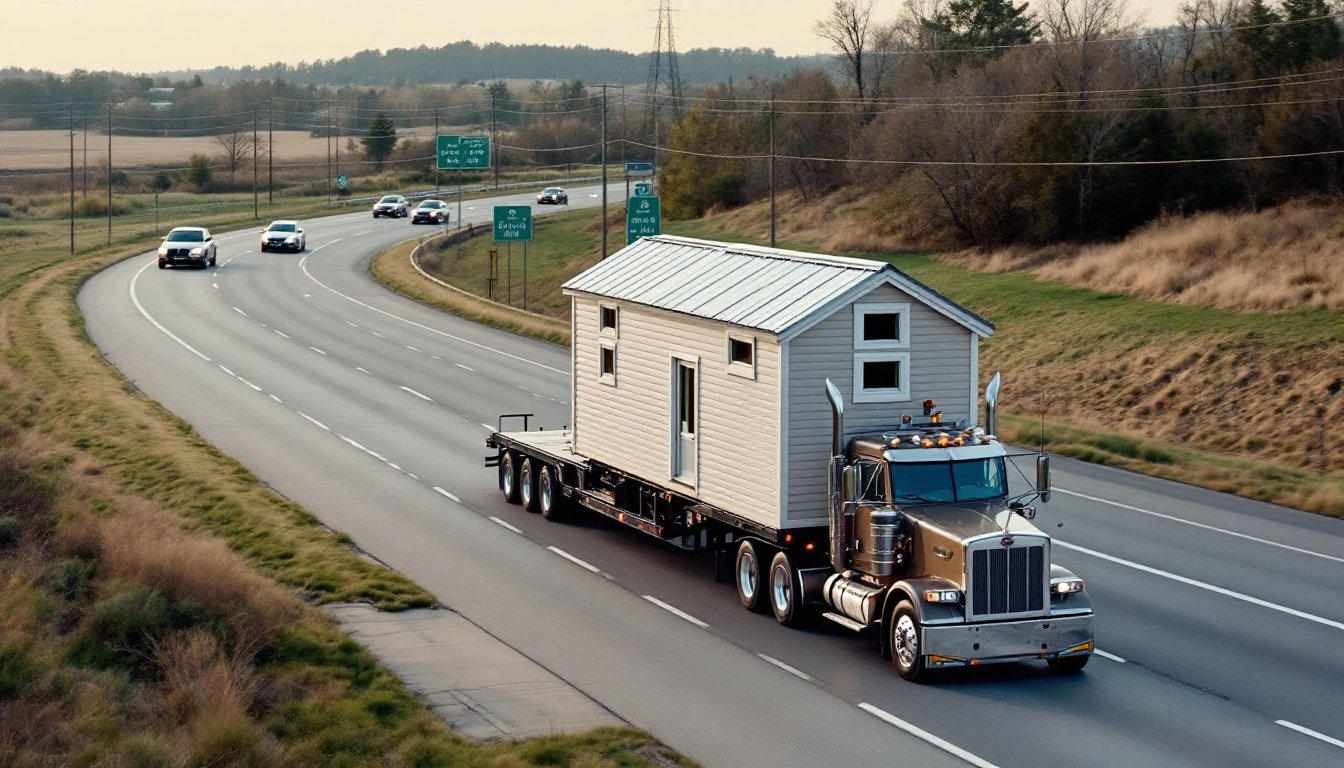

Tiny house living has become increasingly mainstream, but the logistics of actually moving one remains one of the most daunting challenges for owners. Tiny house transport isn’t like hiring a standard moving company, it requires specialized equipment, advance planning, and an understanding of regulations that vary by state and jurisdiction. Whether someone is relocating an existing tiny home or moving into a new one, knowing the ins and outs of tiny house transportation can mean the difference between a smooth relocation and an expensive headache. This guide covers everything a tiny house owner needs to know about getting their home from point A to point B safely, legally, and cost-effectively.
Table of Contents
ToggleKey Takeaways
- Tiny house transport requires specialized heavy-duty flatbed trailers, certified professionals, and DOT-certified equipment—not standard moving companies—to safely relocate homes weighing 8,000 to 22,000 pounds.
- Permit requirements and regulations vary dramatically by state and jurisdiction; verify rules in every state the tiny house will pass through before booking transport to avoid costly delays or legal issues.
- The total cost of tiny house transport typically ranges from $2,000 to $8,000 depending on distance and complexity, plus additional expenses for permits ($50–$1,500), pilot cars ($500–$2,000), and site preparation ($200–$5,000).
- Confirm zoning compliance and local deed restrictions at your destination before scheduling the move, as some areas prohibit tiny houses or require foundation-based construction, making relocation to non-compliant locations prohibitively expensive.
- Prepare your tiny house by securing loose items, emptying water and propane tanks, removing external components like solar panels, and documenting the home’s condition with photos before transport begins.
- Book transport during off-peak seasons (fall and winter) to potentially save money and receive modest discounts, as spring and summer moves command premium pricing due to higher demand.
Understanding Tiny House Transportation Basics
Tiny house transport operates on fundamentally different principles than standard household moving. Most tiny houses are built on permanent foundations or trailers and weigh between 8,000 and 22,000 pounds, far heavier than anything a conventional moving truck can handle. The structural integrity of the home itself depends on how it’s supported during transit, which is why specialized flatbed trailers and securing systems are non-negotiable.
There are two primary categories of tiny houses: those on permanent foundations and those built as travel trailers. Foundation-built tiny homes require foundation removal, placement on a transport chassis, and foundation reinstallation at the destination, this is the most complex and expensive type of move. Travel trailer-style tiny houses are self-contained units already designed for towing and represent the simpler end of the spectrum.
The route itself matters considerably. Highway selection, bridge weight restrictions, overhead clearance, and road conditions all factor into transport logistics. A tiny house that’s 13.5 feet tall will not fit under overpasses designed for standard 14-foot clearance, particularly when accounting for the trailer, suspension, and any equipment on top of the structure. Professional transport companies have the equipment and knowledge to map safe routes and secure necessary oversized-load permits.
Permits and Legal Requirements for Tiny House Movement
Legal requirements for tiny house transport vary dramatically depending on where the home is being moved. Most states require oversize load permits for any vehicle exceeding standard width (8.5 feet), height (13.5 feet), or length (60 feet) limits. Some states mandate pilot cars, additional vehicles that travel ahead and behind the tiny house to block traffic and warn oncoming drivers.
Before transport begins, the owner needs to verify regulations in every state the house will pass through. A house moving legally in Oregon might require expensive permits and pilot cars in California. Some counties also restrict transport to daylight hours or specific days of the week. Idaho, for example, has notably strict regulations for oversized loads, while Texas tends to be more flexible.
At the destination, local zoning laws determine whether the tiny house is permitted to occupy the land. Deed restrictions, HOA bylaws, and local codes sometimes prohibit structures under a minimum square footage or require foundation-based construction. An owner should confirm zoning compliance before booking transport, moving a tiny house to a location where it’s prohibited is a costly mistake. Most professional transport companies require the owner to provide proof of permits and destination site approval before accepting the job.
Selecting the Right Hauling Equipment and Professionals
Trailer Types and Specifications
The trailer supporting the tiny house must match the home’s weight and dimensions. Standard enclosed car haulers are wholly inadequate, tiny house transport demands heavy-duty flatbed trailers with reinforced frames, typically rated for 15,000 to 30,000 pounds. The trailer should have multiple attachment points for securing the structure, and the connections must account for the home’s weight distribution.
Wide-load trailers can be either extendable or fixed-width platforms. Extendable trailers allow the tiny house to sit centered on the deck, reducing the overall width during transport. Fixed-width flatbeds are simpler but may require the house to overhang slightly, which demands additional permitting and care during navigation of tight spaces.
The towing vehicle must be a heavy-duty diesel truck with appropriate towing capacity. A pickup truck is insufficient, moving a 15,000-pound tiny house requires a Class 7 or 8 commercial tractor. Braking systems, suspension, and transmission must all be rated for the combined weight of the trailer and structure.
Hiring a Certified Transport Company
Attempting tiny house transport without professional help is genuinely dangerous and almost always costs more when things go wrong. Certified transport companies carry liability insurance, understand permit requirements for every jurisdiction, and have equipment to properly secure and distribute weight.
When vetting transport companies, ask for references from previous tiny house moves, not just standard oversized-load jobs. The company should be bonded and insured, with DOT (Department of Transportation) certification for commercial hauling. Verify that the company has actually moved tiny houses before, moving a 40-foot building is different from moving oversized machinery or agricultural equipment.
Get written quotes that itemize costs: transportation, permits, pilot cars if needed, route engineering, and insurance. A typical move across state lines costs $3,500 to $8,000 depending on distance and complexity. Shorter regional moves may run $2,000 to $4,000. Be wary of quotes that seem too low, they often indicate inexperience or hidden costs that appear later.
Cost Considerations and Budget Planning
Tiny house transport costs break into several components, and understanding each helps with budgeting. The base transportation fee covers the truck, driver, and equipment for the move itself. Permit costs vary wildly, some states charge flat fees of $50 to $100, while others base fees on trailer length and weight, potentially reaching $500 to $1,500 per state.
Pilot cars, required in many jurisdictions, add $500 to $2,000 depending on how many states require them and the distance traveled. If the route requires bridge inspections or route engineering to confirm the house can legally pass certain structures, add another $300 to $1,000.
Site preparation costs at the origin and destination should not be overlooked. The house must be properly lifted and stabilized on the transport trailer, which may require temporary concrete pads or hydraulic jacks, budget $200 to $600 for this. At the destination, if a foundation must be poured, reconnection to utilities, and stabilization of the home on its new foundation, costs can easily exceed $2,000 to $5,000. These are separate from the transport company’s fees.
Market conditions and seasonal demand affect pricing. Moving during peak seasons (spring and summer) costs more than winter moves, when transport companies have lighter schedules. Some companies offer modest discounts for winter relocations. Geographic complexity matters too, moving through mountainous terrain or dense urban areas costs more than flat, rural routes.
Preparing Your Tiny House for Transport
Proper preparation prevents damage and keeps the transport process safe. Start by securing loose items inside the home, cabinets, drawers, and appliances should be locked or fastened. Water tanks, propane tanks, and fuel systems must be emptied or, if they’ll remain, inspected and secured to prevent leaks during transit. Many transport companies require tanks to be empty for insurance reasons.
External components need attention too. Remove or secure solar panels, satellite dishes, exterior fans, and antennas. Slide-out sections on travel trailers must be fully retracted and locked. Doors and windows should be latched or sealed to prevent rattling and potential breakage during the move.
The transport company will perform a final walk-through inspection and photograph the home’s condition before departure. Document the home’s condition independently as well, take photos of the exterior and interior, noting any existing damage. This protects against liability claims if something goes wrong in transit. If the home will be in transit for more than a day, ensure proper ventilation to prevent moisture buildup inside.
Finally, notify utilities at both locations. Disconnect or schedule disconnection at the origin, and arrange for connection at the destination. Some transport companies handle site logistics, but it’s the owner’s responsibility to confirm everything is scheduled before transport day arrives. Double-check with the transport company 48 hours before the scheduled move, weather, mechanical issues, or permit delays can cause postponements, and confirming avoids unnecessary stress on moving day.